
There’s a famous Borges story about a map that’s exactly the same size as the territory it covers, which sounds perfect but results in all kinds of problems which he methodically describes, of users tripping over it trying to match it up with the countryside lying somewhere underneath, even punching holes in it to pin down the comparison between actuality and concept.
Anyway, I take this impossible situation as a metaphor for my current predicament, in which the topics I want to pursue are falling over each other and becoming so hopelessly tangled that I am losing track of both of them (at the moment) or all of them (in the longer term). I have a terrible feeling that in trying to keep them all alive I’m going to lose the lot.
The most recent chapter in this struggle to hold onto things which are undergoing headlong expansion has me standing helpless on the sidelines as a five-day visit to Cambodia morphs into an encounter with hundreds of Indian temples spread over large tracts of the sub-continent, which could swallow up several lifetimes. The story begins with another attempt to go somewhere in the midst of the so-called pandemic which is currently engulfing the whole world and subtracting most of what went before.
Twenty years ago I spent five days at Angkor in the middle of the Cambodian jungle. They have expanded in memory ever since, until I can hardly believe my notebooks from that time that tell me how long I spent in each temple complex and how much time I took out for meals or quick swims. Can it possibly be true that it all fit into five days, including flights to and from Bangkok?

Over the years since, I have often wished I could fit in a return, a dream I never gave up until now. Yet now seems the time to take this trip, now that I have all the time in the world. It will not be as easy as re-visiting the old exhibition of Chinese paintings in Cleveland, but it will explode into a greater variety of forms. I will start with images, projecting my slides wall-size and getting lost in carved detail lit by late evening sun. I will track down all the subjects represented there that I didn’t bother with at the time, like the row of deities with horses’ heads sitting cross-legged on a pediment at Ta Prohm, the famous wild temple, where they sit right next to a parasitical kapok tree which has rooted itself in an open gallery it now towers over and to which it provides structural assistance, unless it is quietly taking the walls to pieces.
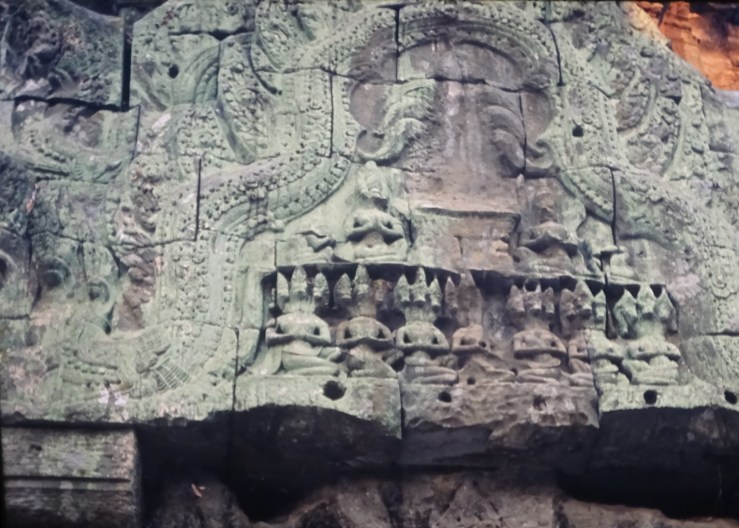
Not so easy to find out who these horse-men are. I’m not getting far beyond the old guidebooks. I am also amazed at how few pictures there are to look at. In those pre-digital days I came back with ten rolls of film from three weeks in India, four hundred images that seemed a lot at the time.
But from Cambodia, seven shots from Banteay Samre, five from Banteay Kdei, ditto for Bakong, and these were among my favourites. Even so, I see fresh details in the heavily indented platforms at Banteay Samre which the best plans I have leave out. I need better ones and don’t know where to look.
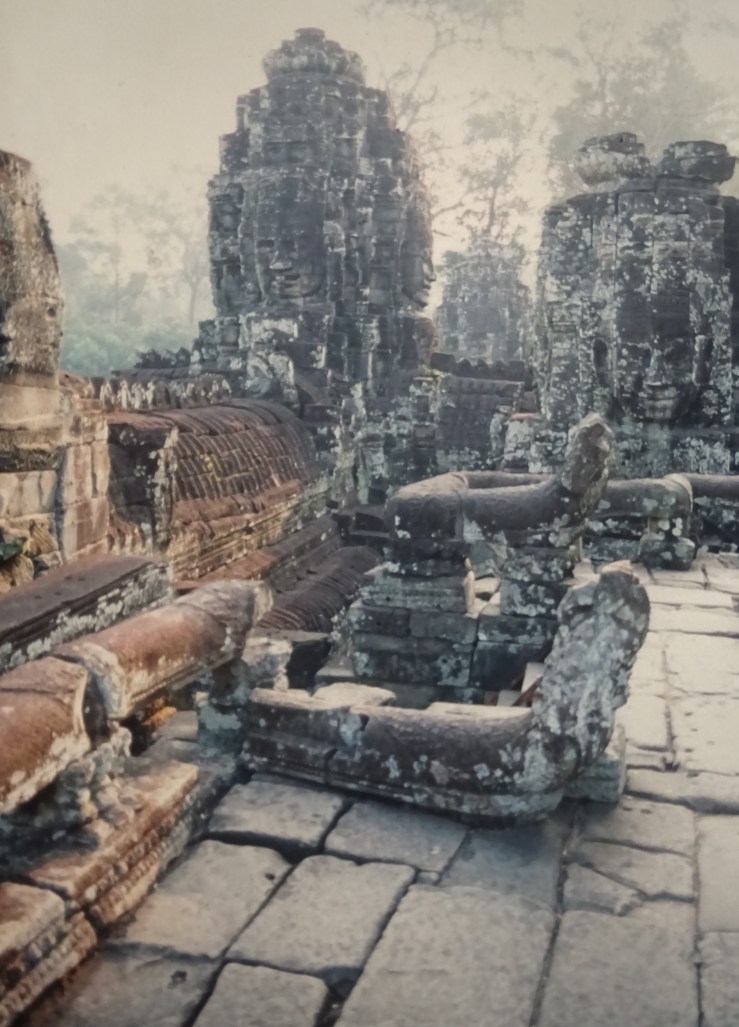
I have had the famous guide by Maurice Glaize on my computer for years, finally begin looking at it now, and discover that it’s better than the guides I used, at least for detail about archaeologists’ reconstructions of the sites. He found Bakong a chaotic jumble and rebuilt it into the most satisfyingly rational temple of all. I even wonder if it hasn’t become a peculiarly French dream of order. After all, Glaize has misgivings about my favourite temple, Bayon, like two buildings inhabiting the same space, a circular plan imposed on a rectangular, which results in one strange, unenterable space after another, mysteries that intrigue me, which Glaize has to hypnotise himself to see the irrational beauty of.
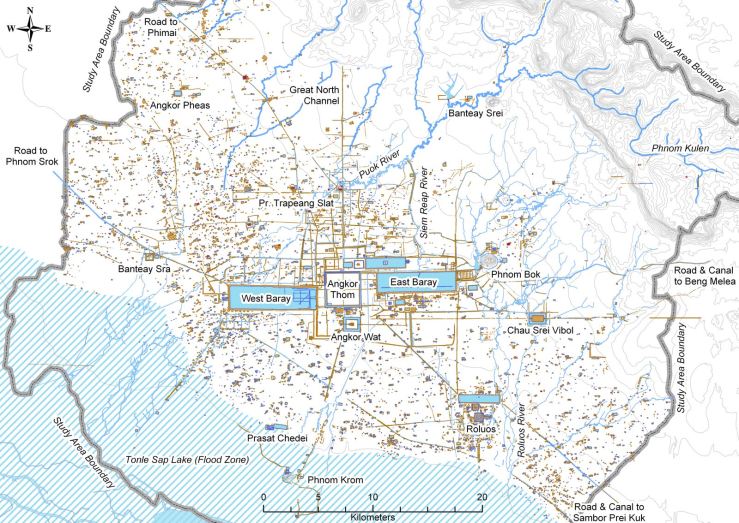
The Lidar surveys of the last decade and a half at Angkor have multiplied the number of ancient features many times. The whole territory stretching sixty kilometres from end to end is freshly crowded with ancient roads, canals, village ponds, embankments, neighbourhood temples and house groups that constitute the largest pre-industrial settlement in the world, all revealed beneath the surface by something like radar. I have long looked forward to tracing whatever of this is visible on the ground, but I still haven’t got a better plan of the discoveries than the A4 image I found online ten years ago. The whole expansion remains discontinuous from aesthetic appreciation of the sites. One real enhancement for me in the meantime has been the addition by Helen Jessup, an art historian, of the free-standing sculptures found in or near the temples over the years, including a great Harihara from Ashram Maha Rosei (now in Paris) and a large sleeping bronze Vishnu found near a well at West Mebon, a site still reachable only by boat (now locked up for its own safety).

My recent ‘trip’ to Angkor has laboured under these various burdens. I imagine that I need digital images of the sites to study the remains properly, images I could pore over at home the way I did in the aftermath of my actual travels, including a memorable visit to Rome with students, after which I discovered Richardson’s New Topographical Dictionary of Ancient Rome which multiplied archaeological sites in the city many times, including whole new sorts of survival like ancient gardens, and which extended that trip for several weeks after most of those who had been there thought it was finished.
Weirdly enough–the great perplexity of the moment–my current trip to Cambodia was extended and confused by the Encyclopaedia of Indian Temple Architecture, which I first met in a remainder bookshop, since closed, like many others.
In those days, just before our first trip to India, this encyclopaedia suggested lots of new places to visit, very convenient to our starting point in Goa. But was Goa the chicken or the egg? Did the book dictate the landing place, or did Goa make sense of the book as a purchase that might have a real point for the travellers?
Whichever came first in the first place, in the second (the imaginary revisit to Angkor) the role of the Indian Encylopaedia has been more tortuous. I had a craving for more detailed and systematic treatment of Khmer remains, more like what you got in that two-volume set I bought on March 7, 1998 which covered South India, Upper Dravidadesa, Early Phase, which sounded specific enough, threateningly so. I had no idea where Dravidadesa was, which didn’t sound like a place, but more like a demon. I still don’t have a clear one, except that I know there is also a ‘Lower’ and that between them they account for all of the southern half of India. It is one of the most baffling but oddly enticing features of these volumes that you are thrown into a sea of Sanskrit terms and expected to do your own swimming. What good is a glossary at the back of the book (which he hasn’t even found yet) to the happy reader who falls into the swamp below?
Located to the south and east of the Saciyamata hill, this west-facing Vaisnava complex stands on a broad jagati consisting of khura-kumbha, kalasa, kapotapali ornamented with candrasalas and ardhapadmas, antarapatta animated by kirttimukhas emitting effulgent foliage, a second japotali ornamented with hamsas and candrasalas, and an upper vasantapattika with acanthus-pattern showing distinct buds. Sub-shrines survive on the northeast, southwest and southeast corners, each set above a broad plain bhitta-slab and a simple manca consisting of kumbha, kalasa and patta with acanthus.
I am still learning about my love of obscurity, where it comes from, what purposes it serves, how far it extends. It continues to puzzle me that there should be such allure in difficulty, and in feeling that you don’t understand very much about a certain human production that must have been created to communicate, perhaps not straightforwardly, perhaps not without persistent dark spots that may never go away, perhaps believing that complete clarity isn’t interesting and can’t be true.
Anyway, in the present instance it took me a long time to notice that I liked the uncertainty created by this unnecessarily complete fog of unfamiliar terms. I looked up a few Sanskrit words, and got a partial sense of what we were talking about. I drew the line at looking up more than a few. Then I forgot the meanings of the ones I had got, which weren’t always clear anyway. Sometimes the glossary gave you only another Sanskrit word, presumably a more common one that the one you were trying to unravel. But the longer I did it, the better I liked the Sanskrit. There was a kind of intelligibility or recognisability about some of these words, a deep resemblance between this language and ones I vaguely knew.
The Encyclopaedia was split into Text and Plates. I decided it worked better to look at the images for a temple or a few temples first, and then at the text. That gave you parts, like doorways or roof structures, that you wanted to see discussed, and you could focus on those.

At Angkor I had particularly liked temples that looked like or were mountains, because they were so ruined they seemed to be reverting to a more primitive state, or because they incorporated actual living rock, like Bayon above all, so that there really was a symbiosis between natural and architectural form, which fit right in with Khmer myths that imagined all creation emerging in an eruption from a particular mountain at the centre of the world. I hadn’t yet made the connection between two of the Indian temples I liked best and the idea of buildings as mountains or other large natural features.
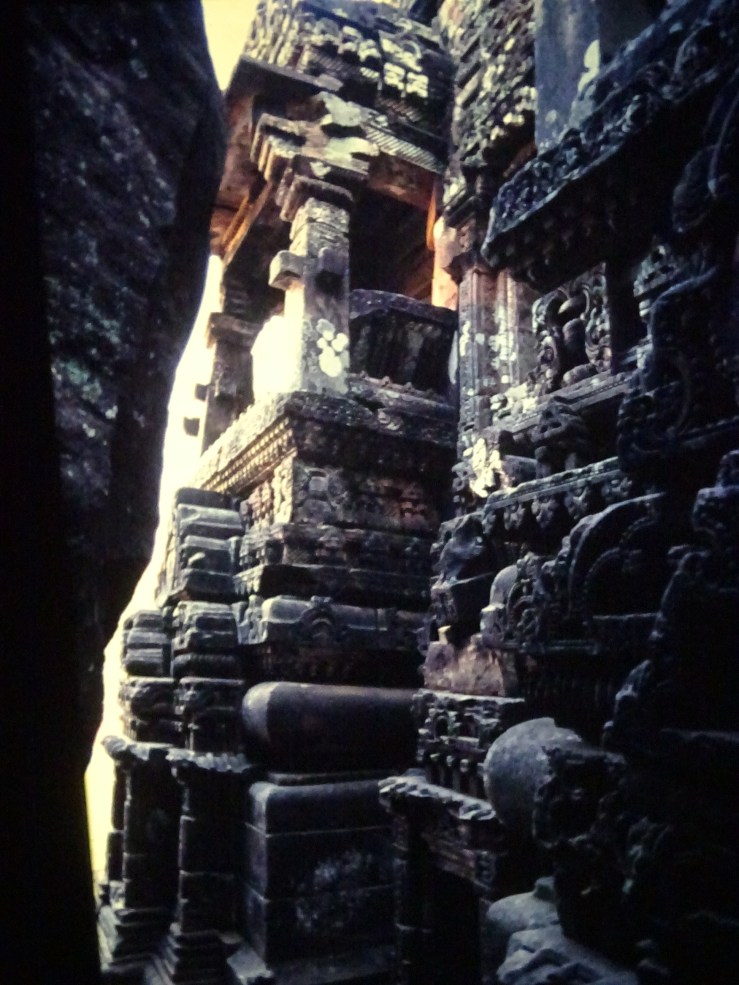
Somehow, without understanding what I was doing, I was letting my interest shift from Cambodia to India, from my inadequate sources for Angkor to the better ones I knew for India. I didn’t remember specifically at that point that Cambodian religions and architectural forms had come from India in the first place, so there was something natural and right about following the trail backward to India, like tracing the Ganges to its source in the Himalayas.
My interest in Cambodia had started in India. Cambodia was only an offshoot, an interlude in a lecture about Indian architecture. And that is why I ended up spending only five days in Cambodia. It represented a digression within something larger. And that also explains why I was bound at some point to retreat back to India. When it happened, the retreat irritated me no end, and I raged. ‘Why am I giving up the very trip I wanted to take most of all?’ As you will see, it was only one of a series of defeats, ceding one subject after another to my knack for forgetting what I had come for, losing sight of the initial goal and replacing it with a substitute.




















![34 ptg twombly untitled [say goodbye catullus to the shores of asia minor]1994 room w huge mural menil houston.jpg](https://robertharbisonsblog.net/wp-content/uploads/2020/01/34-ptg-twombly-untitled-say-goodbye-catullus-to-the-shores-of-asia-minor1994-room-w-huge-mural-menil-houston.jpg?w=739)
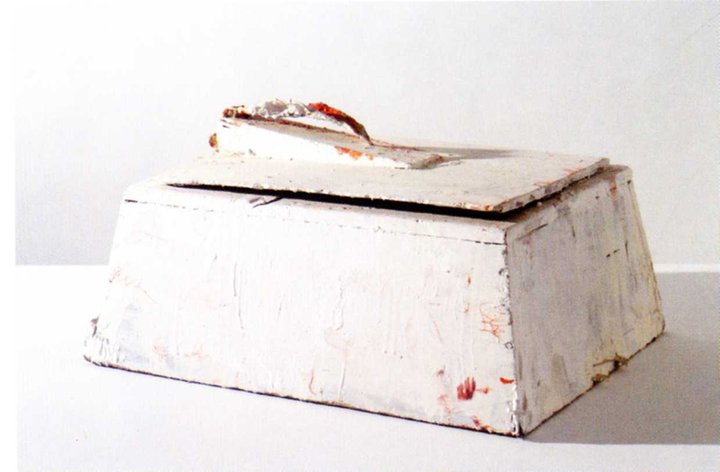
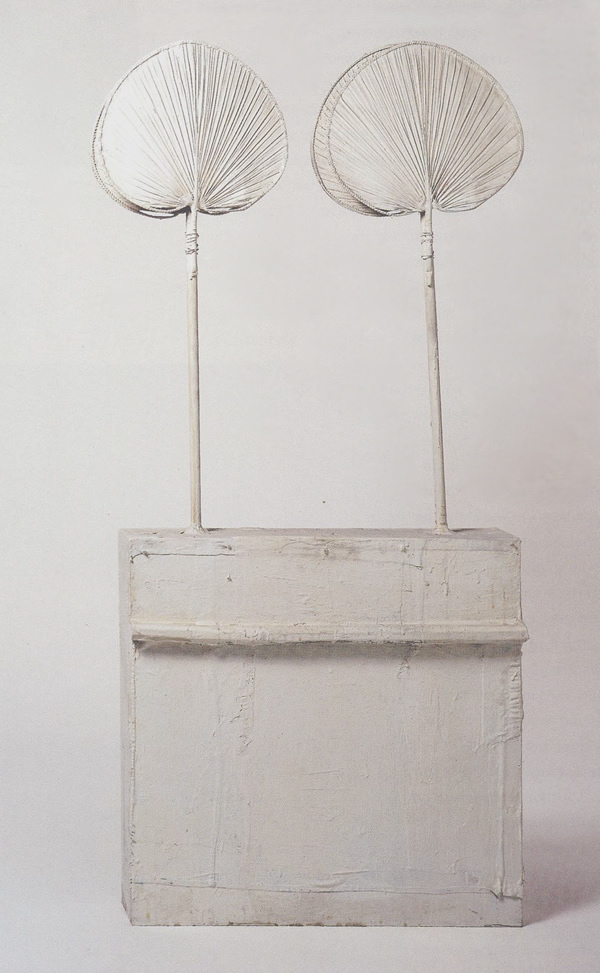
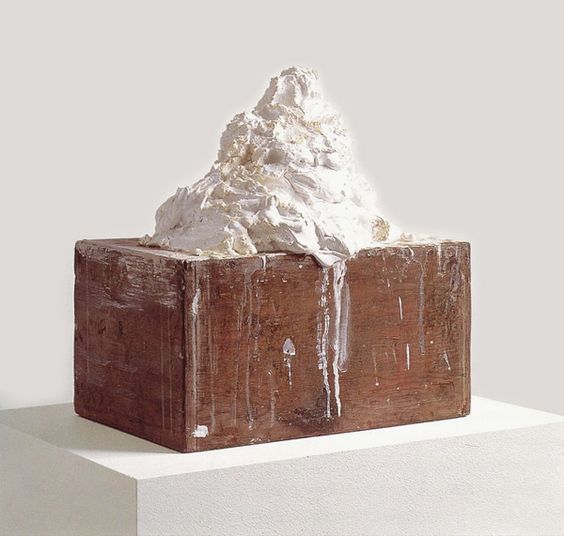
 The work consists of another steep ascent and precipitous fall. A slender frame contains an exuberantly molten platform-mound of plaster heaving with life, but the overall impression is something like a guillotine waiting to descend. The childish quality of Twombly’s inscribings makes me think of a-semic writing, writing that looks like words but isn’t, a mode with which Twombly filled whole canvases in certain phases of his career.
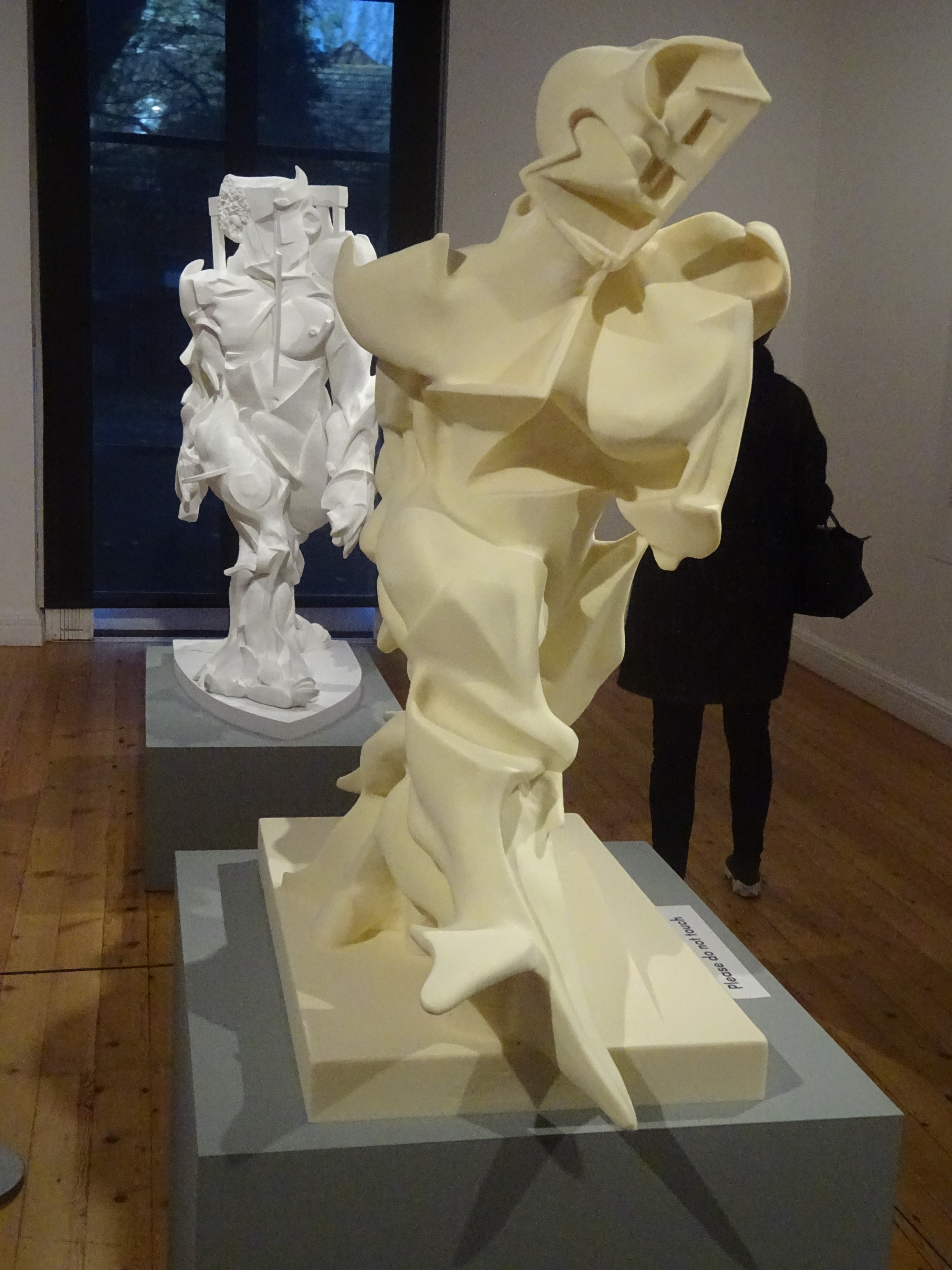


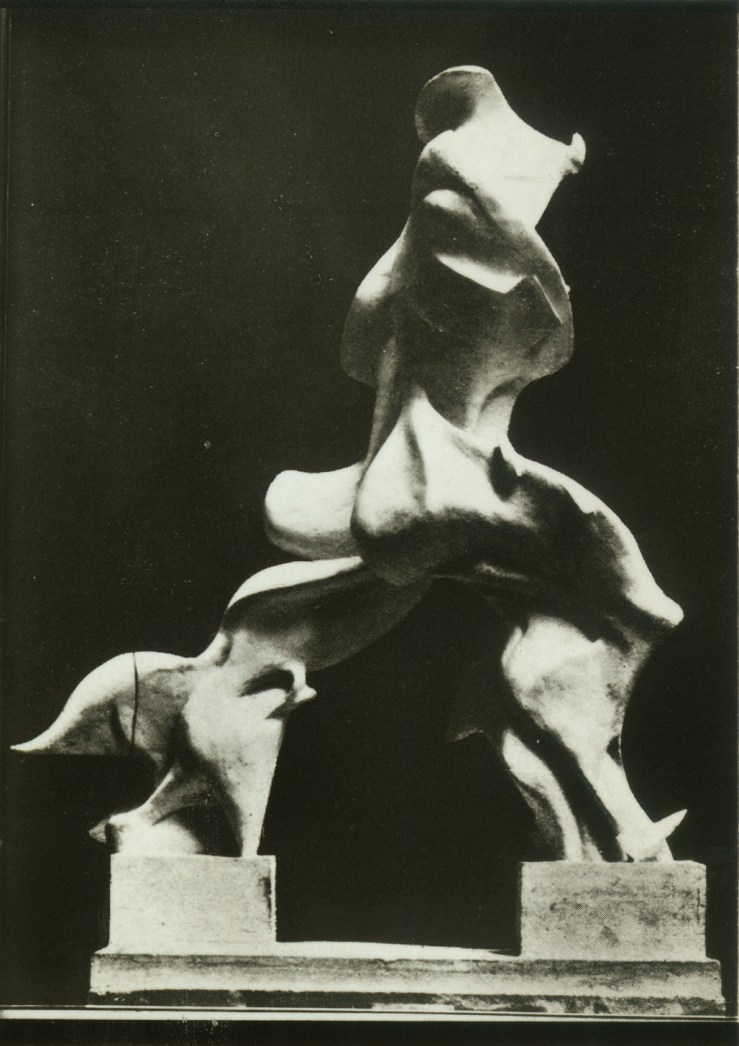


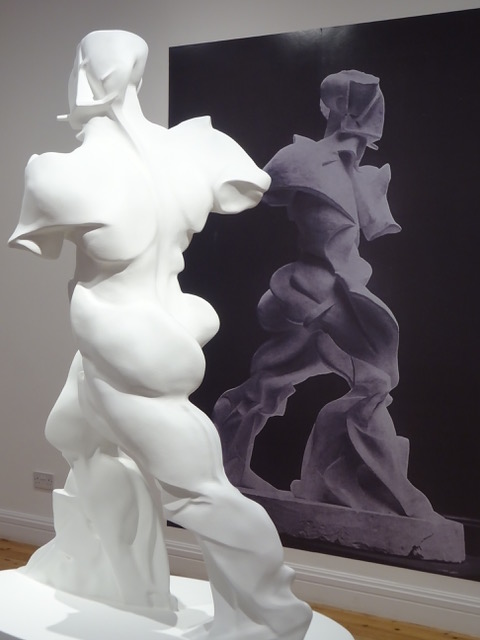
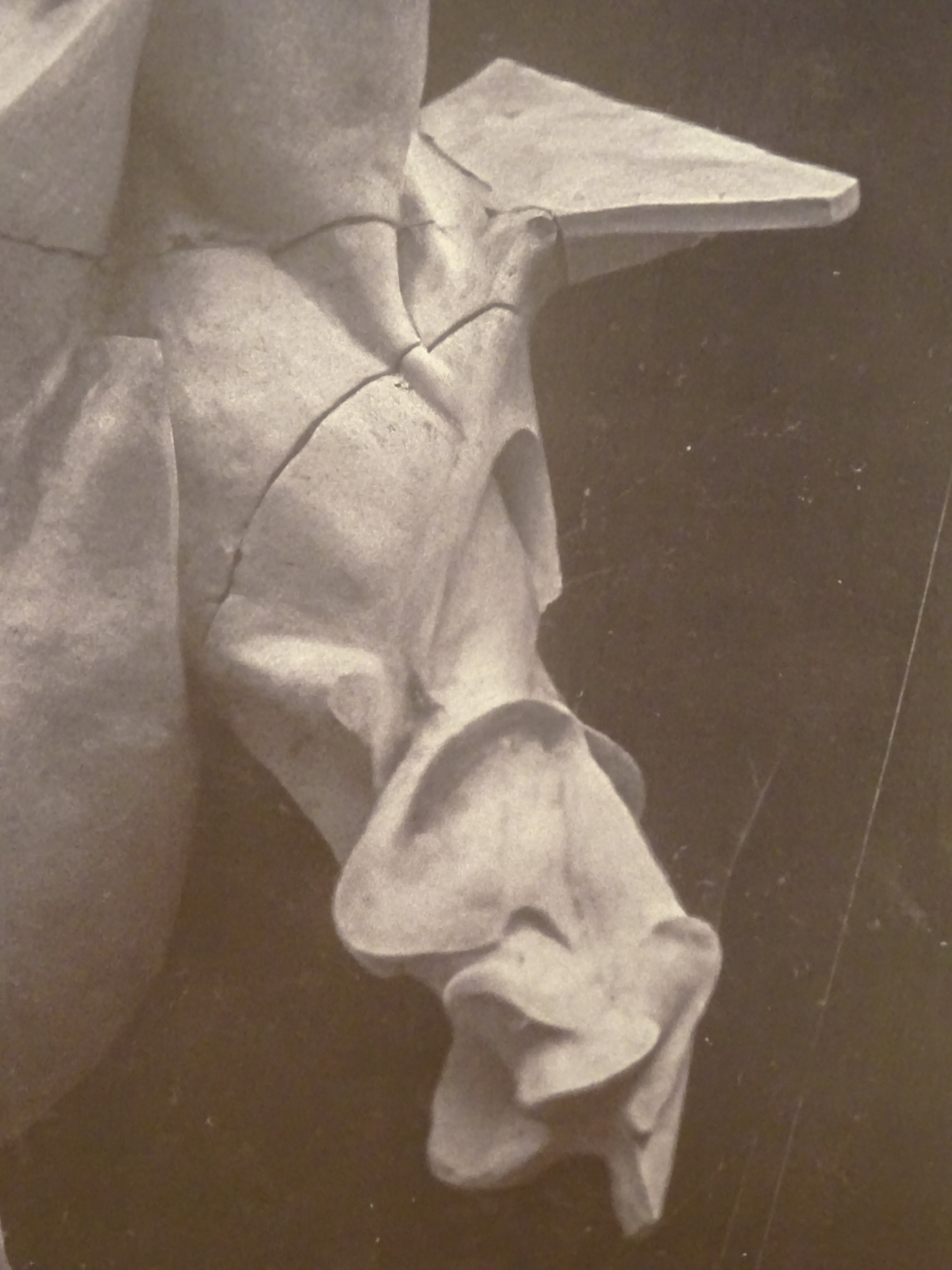
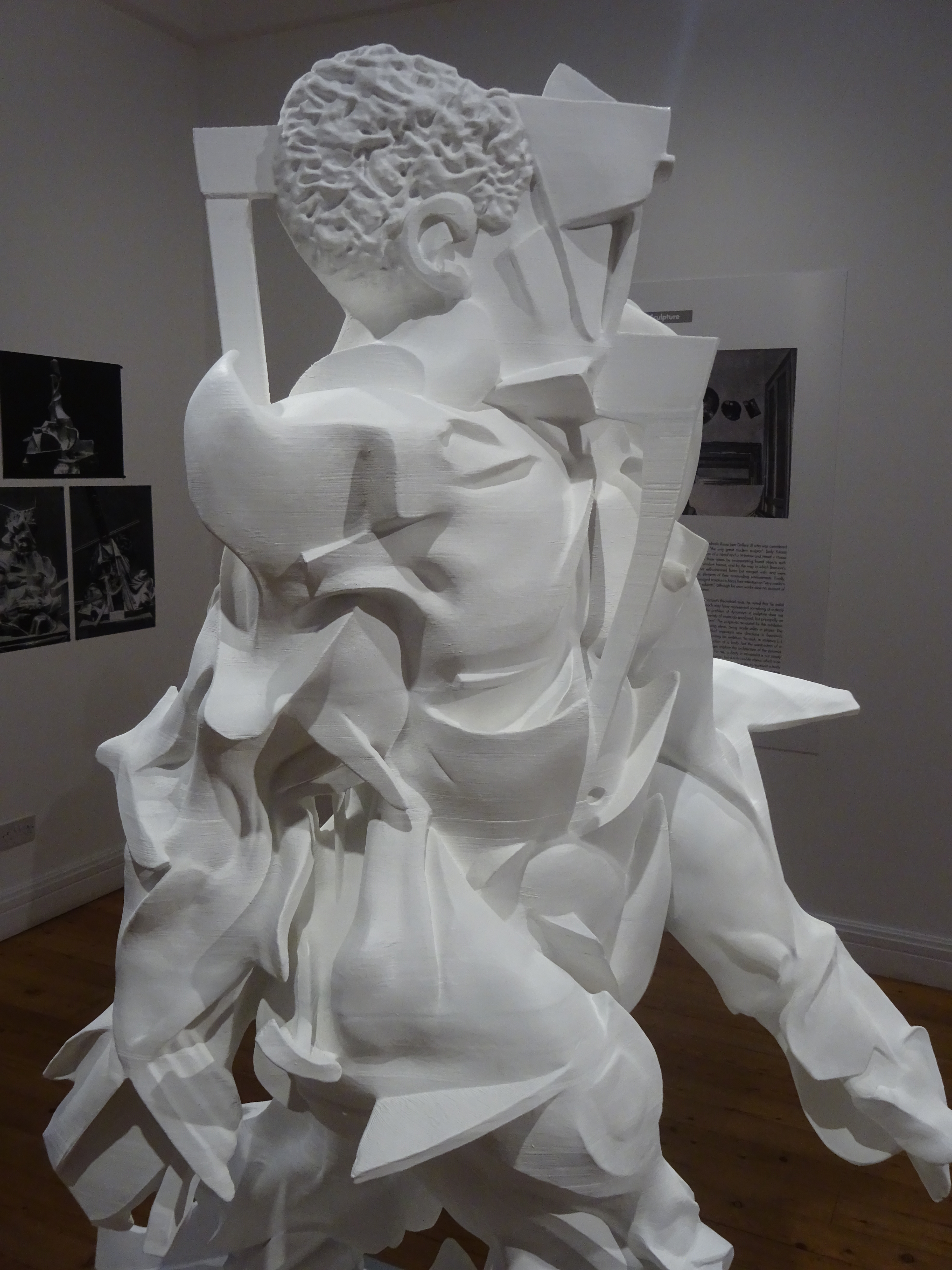
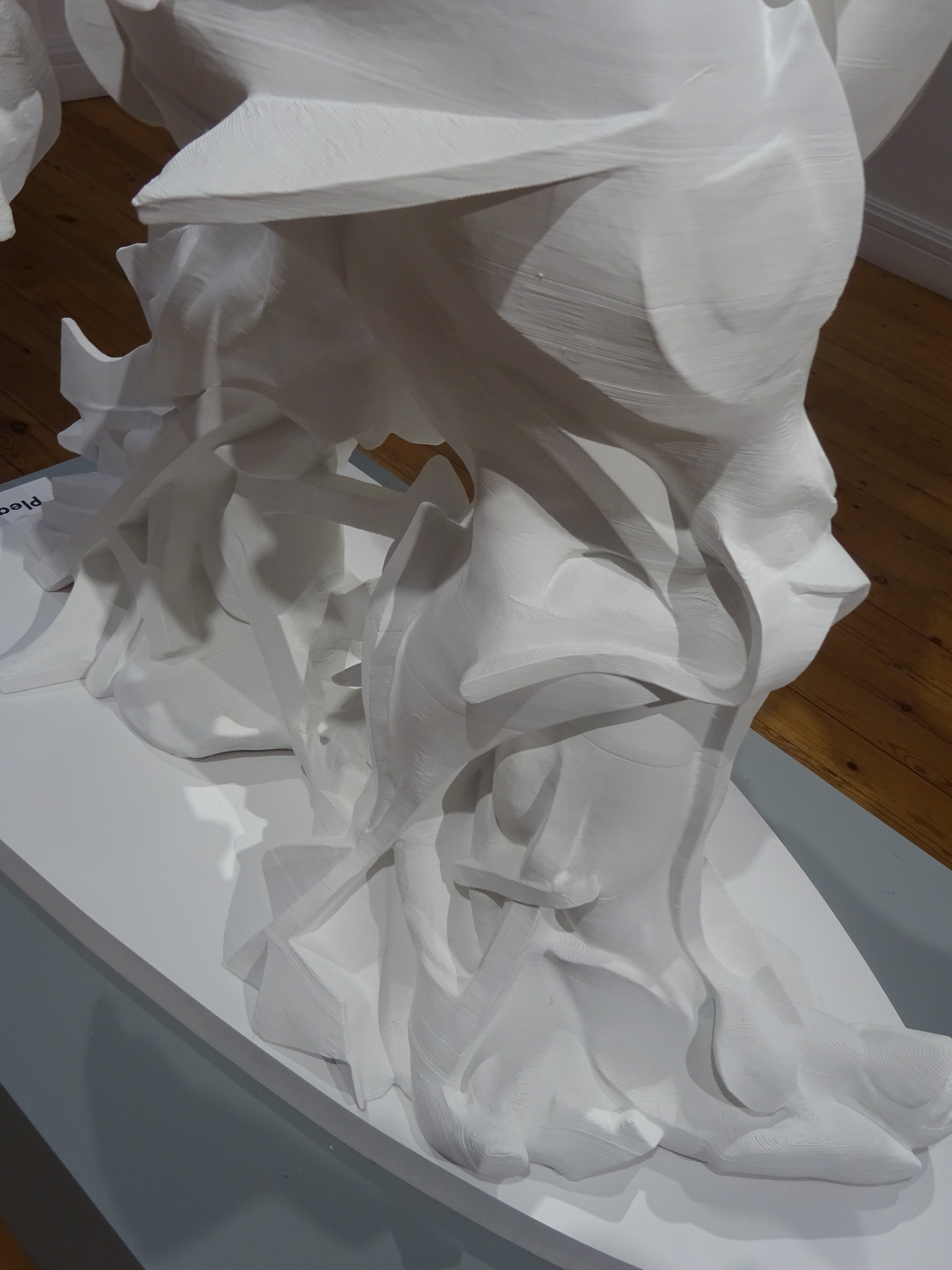 From certain angles the ‘feet’ of the giant look covered in feathers, and the work’s whole effect seems one of the most disunified ever, diverse as only forms produced by a centrifuge could ever be in the real world.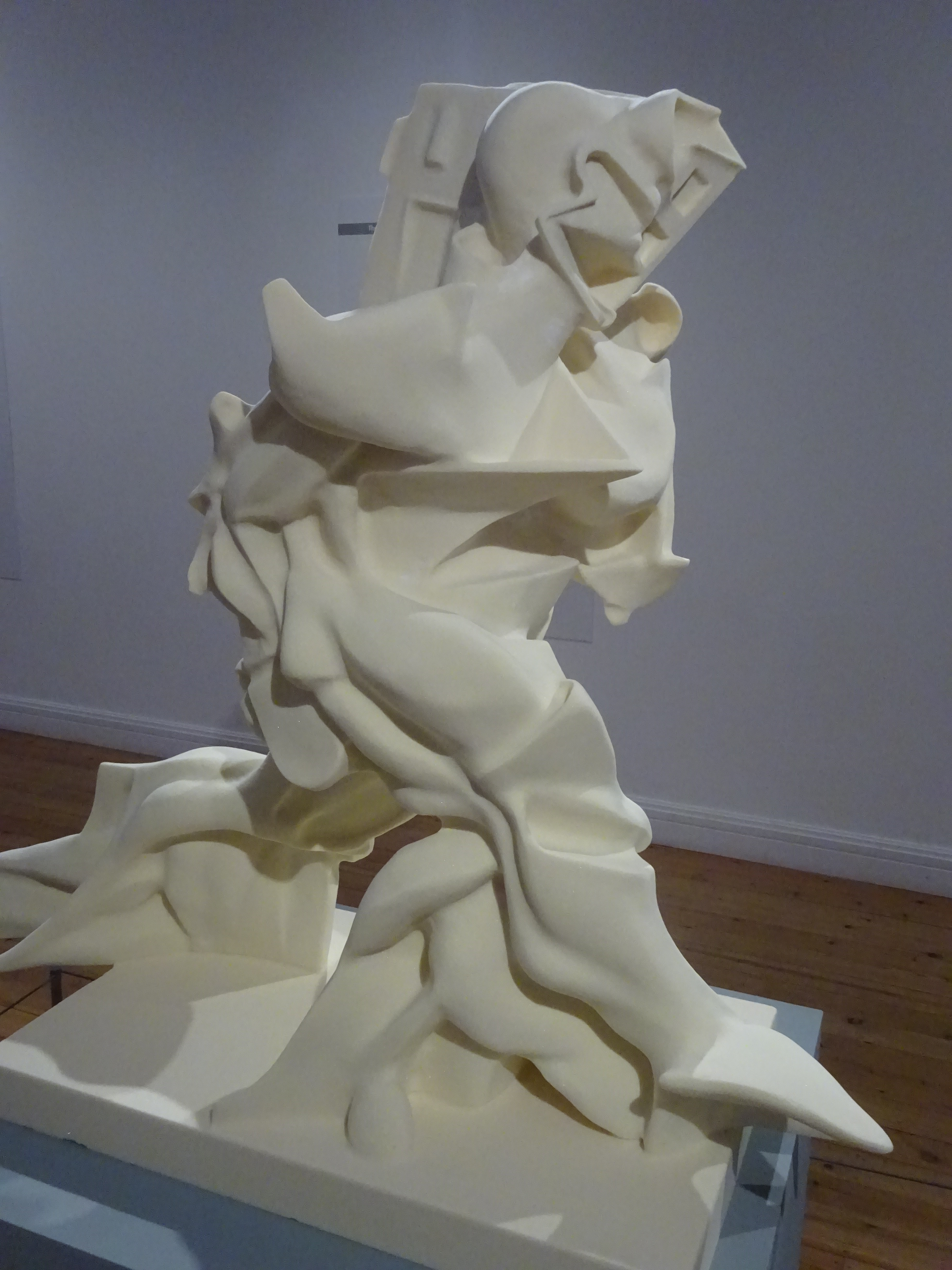


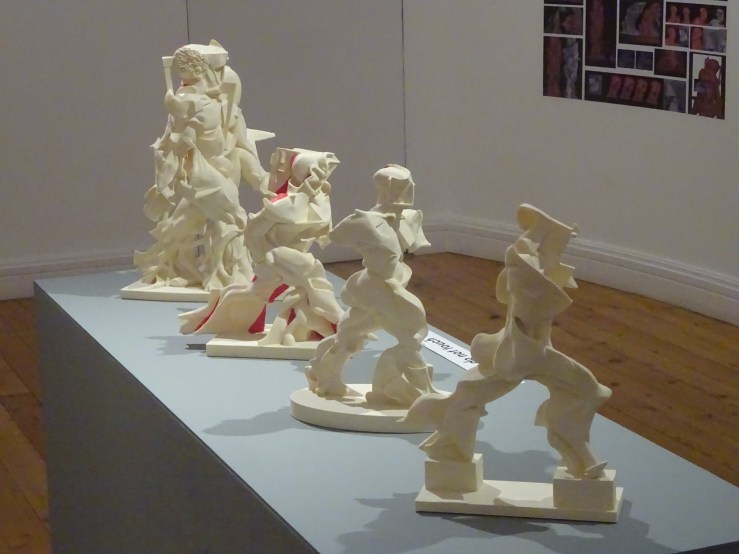
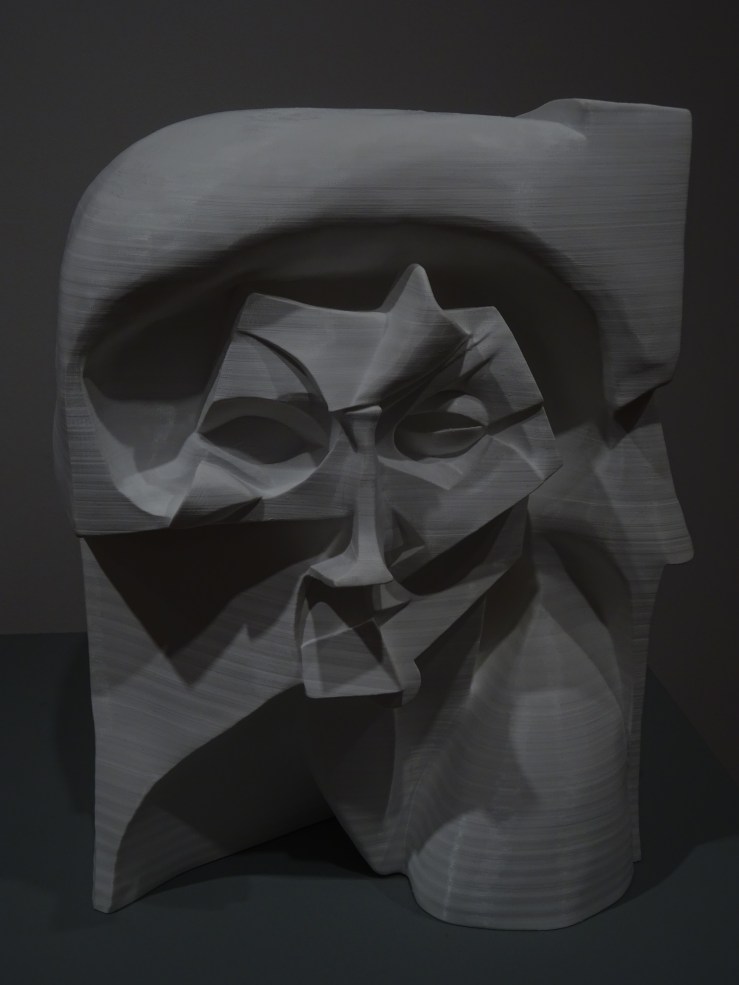

 Paolozzi himself drew attention to the diversity of his sources, even reading a list during a lecture at the ICA to show the whimsical range of all the various objects which had caught his eye. It’s amusing and deliberately alarming, but it sets us barking up a lot of wrong and non-existent trees.
 The trouble is that none of these things are there any more in the sculpture, only impressions such as you might capture in hot wax or castings in a single material that levels out the variety, as if you had buried them all in the same earth (or metal, for they are now all uniformly a messy, unbeautiful bronze). So they are like the things in Wallace Stevens’ poems, tantalising ghosts of their sisters in ordinary reality or even worse, barely recognisable, partly overlaid by something else, no longer nameless because turned to liquid and run out across the flat background sheet. And many of Paolozzi’s ‘things’ are only parts of things—handles, tubes, eyes (as in hooks and eyes), washers, circuit boards, many of them only vaguely familiar to un-mechanical man.
 In some sense it is a true entry into this hidden realm of Paolozzi’s activity to plunge right into the phantasmagoric textures without allowing an overall orientation to start with, but it is also a misrepresentation because you do recognise the figure before you get swamped by the detail, which may be the essential experience of these works, but isn’t the starting place.
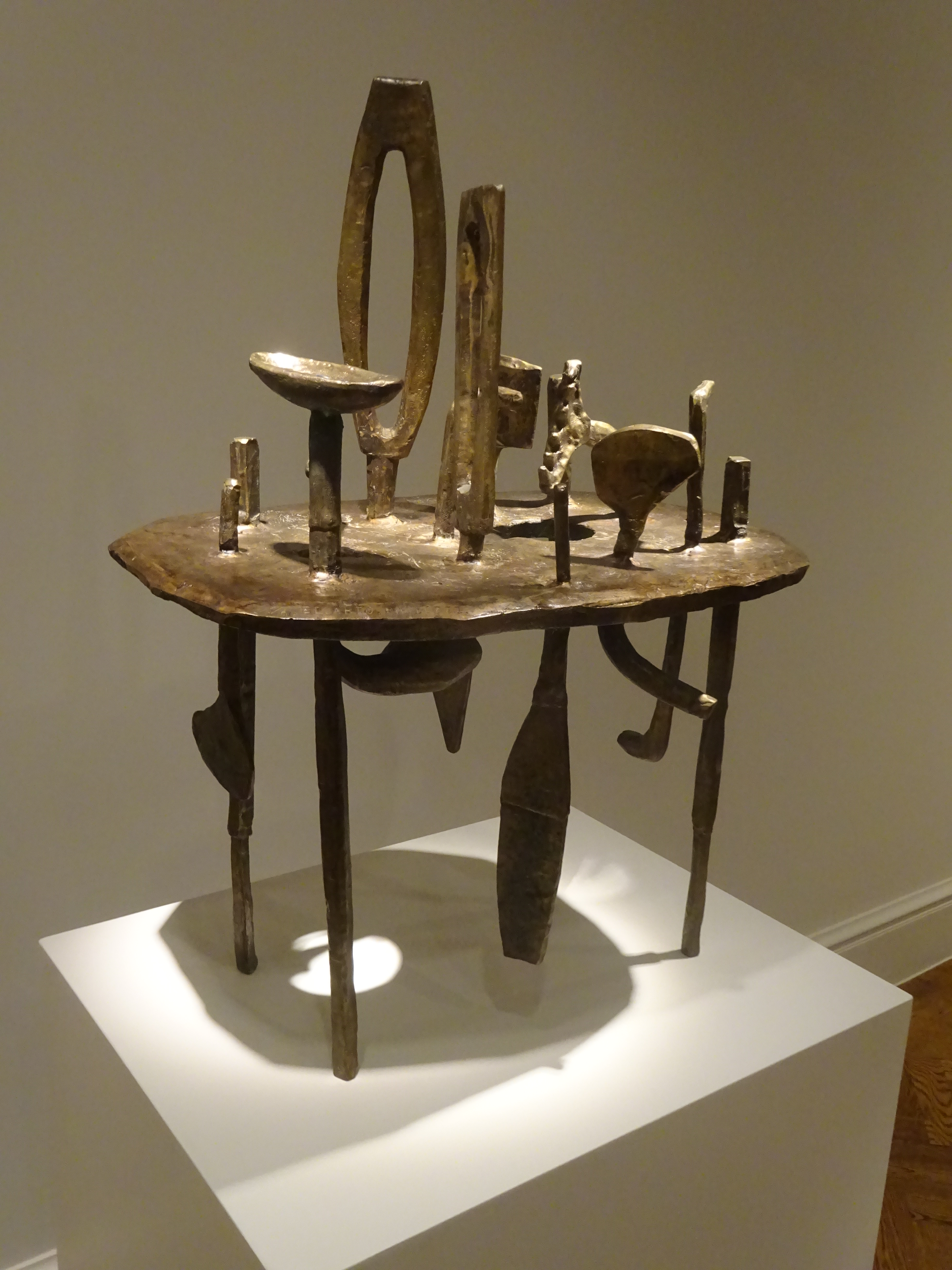 So I set about naming the strange beings: limping man, hideous puckered man, triangulated man (or lopsided man, semaphore man, glued-together man, splat-man—all names for one of my favourites, so a good place to start). He is off-centre, deliberately so, and seems to be sliding sideways. I can’t explain why this unworkable geometry is so compelling, or why I love the idea of an uncountable number of pieces so unreliably bound together.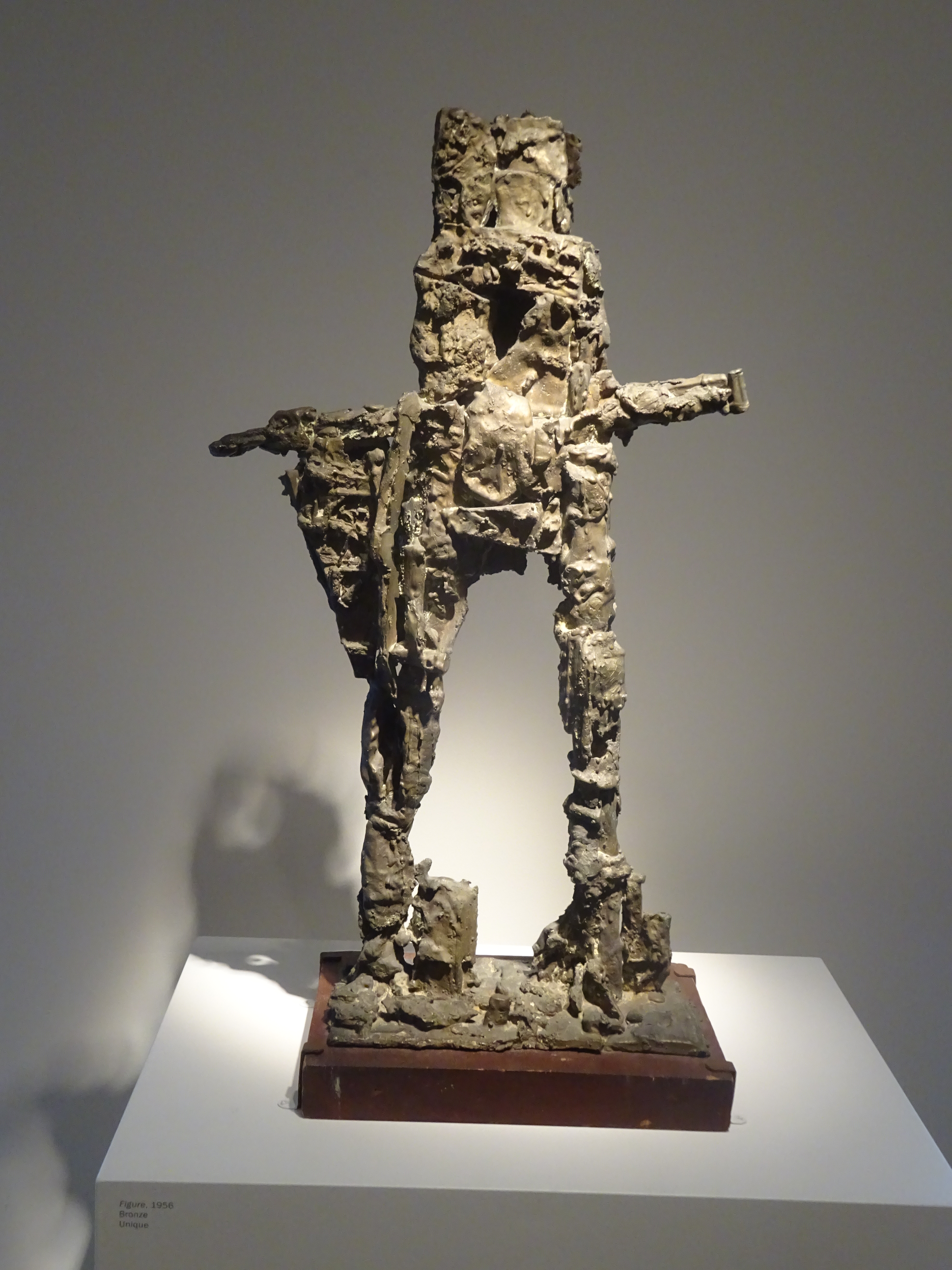


 There’s Robot, whom I know as toga-man or Roman senator, who unfurls a scroll in front view but shocks us from the side and behind where he looks uncannily like Snoopy the cartoon-dog, but then you notice punctures in the dog’s head which allow you to thread the object like a Chinese landscape on a scroll, where you get lost in a series of miniature interiors.
 There are sculptures to which accidents seem to have happened, like Shattered Head, for whom I’ve invented a narrative, in which he was intact and harmonious to start with, but was dropped on a hard surface and smashed, after which he was carelessly reassembled, so that the openings in his face are no longer in the right places, but we read them as eyes and nostrils anyway, now grotesquely misplaced as we have sometimes seen with badly wounded veterans.
 There’s even one called Damaged Warrior, ambiguous name—is it the sculpture or the man who has suffered? He is Truncated Man, sliced in two by a bomb or by the artist’s decision, but how could you choose to cut this torso in just this way?
 I can’t remember any work by other sculptors which goes further or gets separated more radically from likelihood. Yet Paolozzi soon grew tired of the endless transformations. Perhaps the various discontinuities are too great to go on thinking up new ones forever, and there’s an almost inevitable urge to return to the world of everyday possibility, but while it lasts, Paolozzi’s 5-year excursion into fully three-dimensional surrealism is without equal.


















 robert harbison's blog